
A customer driving I-4, heading through Davenport, or navigating a busy Orlando corridor may see your billboard several times before they ever search for your name. That repeated exposure is exactly why knowing how to integrate billboard marketing into the rest of your media plan matters. Outdoor advertising can make every other channel work harder by building familiarity before the click, search, store visit, or sales call.
A billboard should not carry the entire weight of your marketing. It should create the broad, consistent visibility that gives your targeted channels more momentum. When customers have already seen your brand on a familiar route, your digital ad feels more recognizable, your social post feels more credible, and your promotion has a better chance of getting noticed.
Start With One Clear Campaign Job
The strongest integrated campaigns begin with a simple decision: What must the billboard accomplish? A local restaurant opening a new location may need awareness and driving directions. A home services company may need homeowners to remember its name before an urgent repair. A regional healthcare provider may want to reinforce trust across multiple communities.
Do not ask one billboard to explain every product, service, offer, and brand value. Outdoor works best when it delivers one memorable idea at speed. That idea should become the anchor for the rest of your campaign.
If your campaign message is “Same-Day AC Repair,” your search ads can target urgent repair terms, your radio spot can explain availability, and your landing page can capture service requests. The billboard establishes the need and makes the company name familiar. Each channel then does the job it is best equipped to do.
This focus also makes creative approval easier. Instead of debating several competing messages, your team can evaluate every ad, email, social post, and promotion against one question: Does it reinforce the campaign idea?
How to Integrate Billboard Marketing With Digital
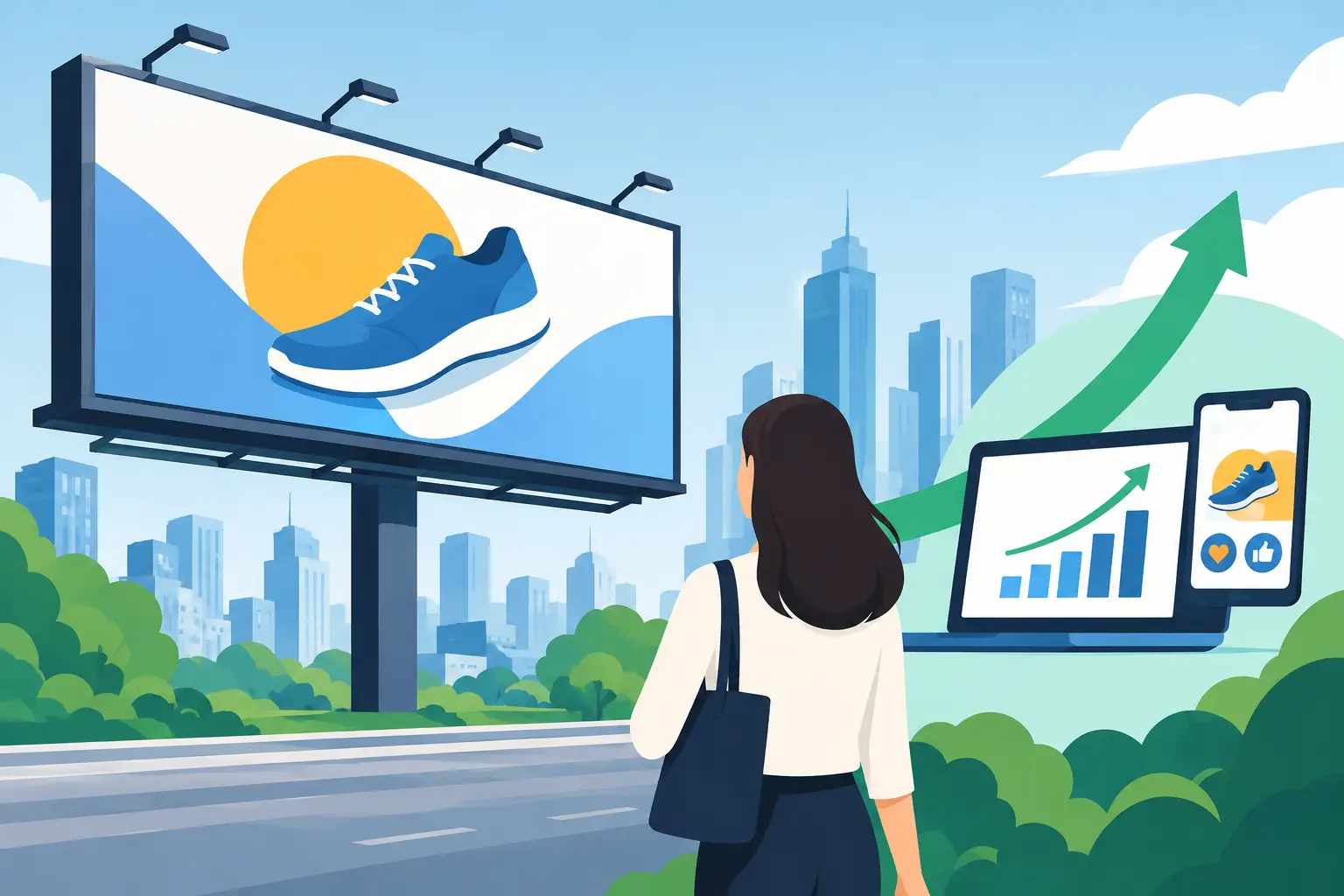
Digital marketing is often where billboard campaigns become most measurable. Outdoor creates high-frequency exposure across a broad local audience, while digital channels help re-engage people when they are ready to take action.
Start by aligning your paid search, display, streaming, and social campaigns with the same headline, offer, or visual identity used on the board. The goal is recognition. Someone who sees a distinct color, short phrase, or product image on a billboard should immediately connect it to the ad that appears later on their phone or computer.
Keep the billboard creative simple. Use a short headline, a prominent brand name, and an easy-to-read call to action. A complex URL, long offer details, or tiny legal copy will not perform well from the road. Your digital ads and landing pages can provide the details that outdoor cannot.
Use Search to Capture Demand
Billboards often influence behavior that appears later in search data. A driver may not pull over to visit your website, but they may search your brand, category, or location that evening. Running branded search campaigns during an outdoor flight helps protect that demand from competitors and gives interested customers a direct route to conversion.
For a local business, consider pairing billboard coverage with search campaigns focused on the cities and service areas you want to grow. A company advertising near Lakeland may support that placement with location-specific search terms, local landing pages, and an offer that applies to that market.
Make Social Content Feel Familiar
Social media should extend the campaign, not repeat the billboard word for word. Use the same visual campaign system, then give people a reason to interact. A billboard promoting a new retail location can be followed by short videos, opening-day reminders, local customer stories, or a limited-time offer.
The trade-off is frequency. A billboard builds awareness through repeated exposure, while social media can become repetitive quickly if every post uses identical copy. Maintain the central message, but vary the content format and supporting proof.
Match the Market, Location, and Audience
Billboard integration starts before creative is designed. A great message on the wrong roadway is still a missed opportunity. Consider where your customers live, work, travel, shop, and make purchase decisions.
A tourism-focused business may benefit from routes serving Orlando attractions, hotels, and major travel corridors. A regional medical group may prioritize commuter routes near growing residential areas. A franchise brand entering Winter Haven or Ocala may need high-visibility coverage that announces its arrival and builds familiarity before launch day.
Location also affects your supporting media. When a board reaches daily commuters, morning drive radio, mobile advertising, and afternoon social placements may reinforce the message at useful moments. When a board serves a retail district, location-based promotions and local event partnerships may be a better fit.
This is where an experienced outdoor partner adds value beyond available inventory. Orlando Outdoor can help businesses match campaign objectives with Central Florida locations, creative direction, production, and placement management. The result is a campaign built around where customers actually move, not just where space happens to be available.
Coordinate Timing Across Every Channel
Integrated marketing works when your channels arrive in the right sequence. A billboard campaign can establish a steady presence over several weeks or months, while digital, broadcast, and promotional activity rises around key moments.
For example, a business planning a grand opening might launch billboards four to six weeks before the event to build awareness. In the final two weeks, it can increase social promotion, paid search budgets, email reminders, and local radio mentions. The billboard keeps the name visible throughout the buildup and continues reinforcing the business after the opening-day excitement fades.
Seasonal businesses should also plan around demand cycles. HVAC companies can build visibility before summer heat. Tax professionals can establish recognition ahead of filing season. Retailers can use outdoor to make a holiday promotion feel bigger and more immediate.
Consistency matters more than trying to be everywhere at once. A sustained campaign with coordinated support generally creates stronger recall than a brief burst of disconnected ads.
Give Customers a Simple Next Step
A billboard does not need to force an immediate response to be effective, but it should make the next step obvious. Depending on your objective, that may be a memorable business name, a short phone number, a store location, a product category, or a concise offer.
Avoid trying to turn every board into a direct-response landing page. QR codes can work in pedestrian environments or slow-moving traffic, but they are not always practical on high-speed roadways. For many campaigns, the better approach is to make the brand and message easy to remember, then ensure search, social, and local listings are ready when interest appears.
If you do use a special offer or tracking code, keep it short and consistent across channels. A customer should not have to remember a complicated phrase after passing a billboard at 60 miles per hour.
Measure the Whole Campaign, Not Just One Placement
Billboard marketing is best evaluated as part of the full media system. Look beyond immediate clicks and compare performance before, during, and after the campaign. Useful indicators include branded search activity, website traffic from target markets, direct traffic, calls, store visits, lead volume, and conversion rates on paid media.
Ask customers how they heard about you, especially for high-value services and in-store purchases. The answer may not always be precise, but repeated mentions of a billboard, a location, or a familiar campaign message provide valuable context.
It also helps to compare markets. If one Central Florida territory receives billboard support while another does not, differences in search volume, inbound leads, or store traffic can help clarify outdoor’s contribution. No single metric tells the whole story, particularly for awareness campaigns. The goal is to understand whether the campaign is making your brand easier to recall and easier to choose.
Keep Creative Consistent, Then Keep It Fresh
Brand consistency is not the same as running the same design forever. Your logo, colors, tone, and core campaign idea should remain recognizable. But fresh headlines, seasonal offers, or rotating digital billboard creative can keep the message relevant.
Static billboards are especially effective for sustained brand presence and a single clear message. Digital billboards provide more flexibility for timely promotions, dayparting, and creative rotation. The right choice depends on budget, market availability, campaign duration, and how often your message truly needs to change.
The best integrated billboard campaign makes your business feel larger, more established, and easier to remember wherever customers encounter it next. Build the board around a clear message, support it with channels designed for action, and give the campaign enough time to become part of the local landscape.