
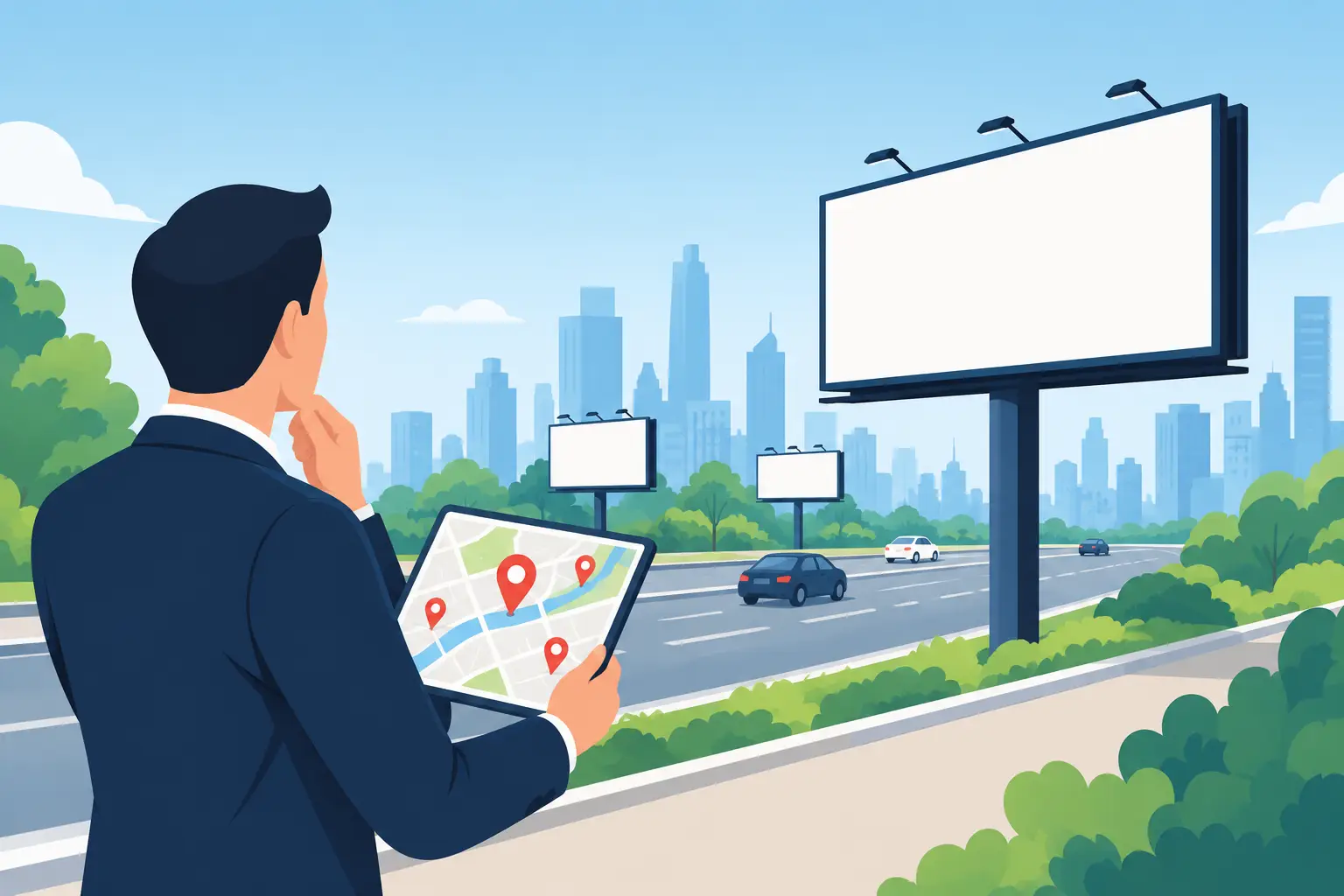

A billboard can have a striking design, a clear offer, and a strong brand name – but it still has to be seen by the right people. That is why a billboard placement review should happen before creative is approved, production begins, or a campaign date is selected. The right location puts your message in front of customers who can act on it. The wrong one may generate impressions without generating meaningful business.
For Central Florida companies, placement is rarely just a question of finding the busiest road. Orlando commuters, vacation travelers, local families, service-area customers, and business decision-makers do not all travel the same routes or respond to the same message. A smart outdoor campaign starts by matching a billboard to the audience, market, and business goal behind it.
What a Billboard Placement Review Should Evaluate
A placement review is a practical assessment of whether a specific display supports your marketing objective. It considers who will see the billboard, how often they are likely to see it, what they can understand in the available viewing time, and whether the location helps move them toward a purchase, visit, call, or search.
Traffic volume matters because it contributes to reach. Yet traffic count alone does not tell the full story. A high-traffic freeway can be valuable for a regional brand building broad awareness, while a board near a retail center, medical corridor, or neighborhood entrance may be more effective for a local business seeking immediate customer action.
The review should also account for travel direction. A display that faces inbound traffic toward your location can work differently than one facing outbound commuters heading home. A restaurant near attractions may want to reach visitors before they choose where to eat. A home services company may benefit from repeated exposure to homeowners traveling the same routes every week.
Start With the Customer, Not the Billboard
The most productive placement conversations begin with your service area and customer profile. Ask where your best customers live, work, shop, commute, and spend time. Then ask when they are moving through those places.
A Davenport hotel, attraction, or restaurant campaign may need visibility along visitor corridors and routes connecting major destinations. A Lakeland or Winter Haven business may prioritize daily commuter traffic and local retail patterns. In Ocala or Sebring, the right solution may be a location that dominates a key route into town or reaches a well-defined regional audience.
This is where a one-size-fits-all media plan falls short. A billboard that looks impressive from the road is not automatically a fit for every advertiser. The goal is to place your message where the people most likely to need your product or service already are.
Match the Location to the Campaign Goal
Brand awareness campaigns benefit from high-frequency placements that keep a business visible over time. For these campaigns, broad coverage, repeated commuter exposure, and a clean, memorable message can create strong recall.
Customer acquisition campaigns may require a more targeted approach. A new urgent care center, dealership, fitness studio, or professional service firm may want displays close to its trade area. The location should help reduce the gap between seeing the message and taking the next step.
Regional and national brands often need market coverage. Rather than relying on one high-profile board, they may use multiple placements to reach audiences across Orlando, Lakeland, Winter Haven, Ocala, Davenport, and Sebring. This approach builds frequency across different travel patterns and keeps the brand present throughout Central Florida.
Traffic Is Valuable, but Context Creates Results
Billboard impressions are a useful way to understand a location’s potential exposure. Still, the quality of those impressions matters. A board on a major highway may reach a large audience, but the campaign must be designed for drivers moving at speed. Short copy, a bold visual, and a single clear brand or offer are usually the right fit.
On slower arterial roads, near traffic lights, or along routes with regular congestion, viewers may have more time to absorb a message. That can support slightly more detail, such as a service category, neighborhood reference, simple call to action, or website. The creative should always respect the real viewing conditions rather than trying to say everything at once.
Consider these placement factors together:
- Traffic volume and the likely number of daily impressions
- Audience makeup, including commuters, tourists, residents, or commercial drivers
- Direction of travel and whether the display reaches customers before a decision point
- Speed, sightlines, and the amount of time people have to read the message
- Proximity to your business, service area, competitors, or relevant destinations
A good review treats these factors as connected. A lower-traffic billboard with excellent proximity to qualified buyers can outperform a higher-traffic display that reaches people with little reason to respond.
Review Visibility in the Real World
Map data and traffic estimates are useful, but the physical experience of the location matters just as much. Can drivers see the board from a meaningful distance? Is it blocked by trees, buildings, overpasses, or competing signs? Does the display appear at a natural point in the road, or does it arrive after drivers have already passed the exit, turn, or shopping destination that matters?
Digital billboards bring another consideration: rotation. They offer the advantage of flexible messaging and dynamic campaign timing, but each advertiser receives scheduled display time within the rotation. This can be an excellent choice for businesses that want efficient exposure, timely promotions, or the ability to refresh creative. Static billboards provide constant presence, which can be especially powerful when a brand wants uninterrupted visibility at a key location.
Neither format is automatically better. The best choice depends on budget, timing, desired frequency, creative needs, and the strategic value of the site itself.
Use Creative That Fits the Placement
Placement and creative are not separate decisions. A spectacular board can lose impact if the message is too dense for the road, while a simple message can become highly effective when it is seen repeatedly by the right audience.
For a fast-moving freeway placement, focus on the brand name, a strong visual cue, and one memorable point. Think of the message as something a driver should recognize in seconds. For a targeted local route, you may be able to add a location cue, short offer, or service benefit that gives people a reason to remember you later.
Consistency also matters. If your billboard supports digital advertising, radio, social media, direct mail, or an in-store promotion, use the same core message and visual identity. Outdoor media works especially well as the high-frequency, always-visible layer that reinforces messages people encounter elsewhere.
Ask the Questions That Protect Your Investment
Before selecting a display, a business owner or media buyer should be able to get clear answers. Who is this location expected to reach? What direction does it face? What local roads, destinations, or neighborhoods influence the audience? How long will the campaign run, and how does that duration support frequency?
Campaign length deserves special attention. Outdoor advertising gains strength through repetition. A customer may not need your service the first time they see your board, but recurring exposure keeps your brand top of mind when the need appears. Short campaigns can support an event, opening, or time-sensitive offer. Longer runs usually give awareness campaigns more time to build recognition and trust.
It is also wise to look beyond the board in isolation. If your business has multiple locations, serves several counties, or competes in a crowded category, your placement strategy may need more than one market touchpoint. Coverage, frequency, and proximity should work together instead of competing for the entire budget.
Turn Placement Into a Growth Decision
The strongest billboard plans make the buying process easier, not more complicated. They begin with a business goal, identify the audiences that matter, select locations that fit real travel behavior, and build creative for the conditions of each display.
Orlando Outdoor helps advertisers bring those decisions together through location guidance, campaign messaging, design, production, and placement management. That full-service approach allows businesses to focus on growth while the operational details stay organized from concept through installation.
Your next billboard does not need to reach everyone in Central Florida. It needs to show up consistently for the people most likely to choose you. Start with the roads they already travel, give them a message they can remember, and let the right placement keep your brand in view.