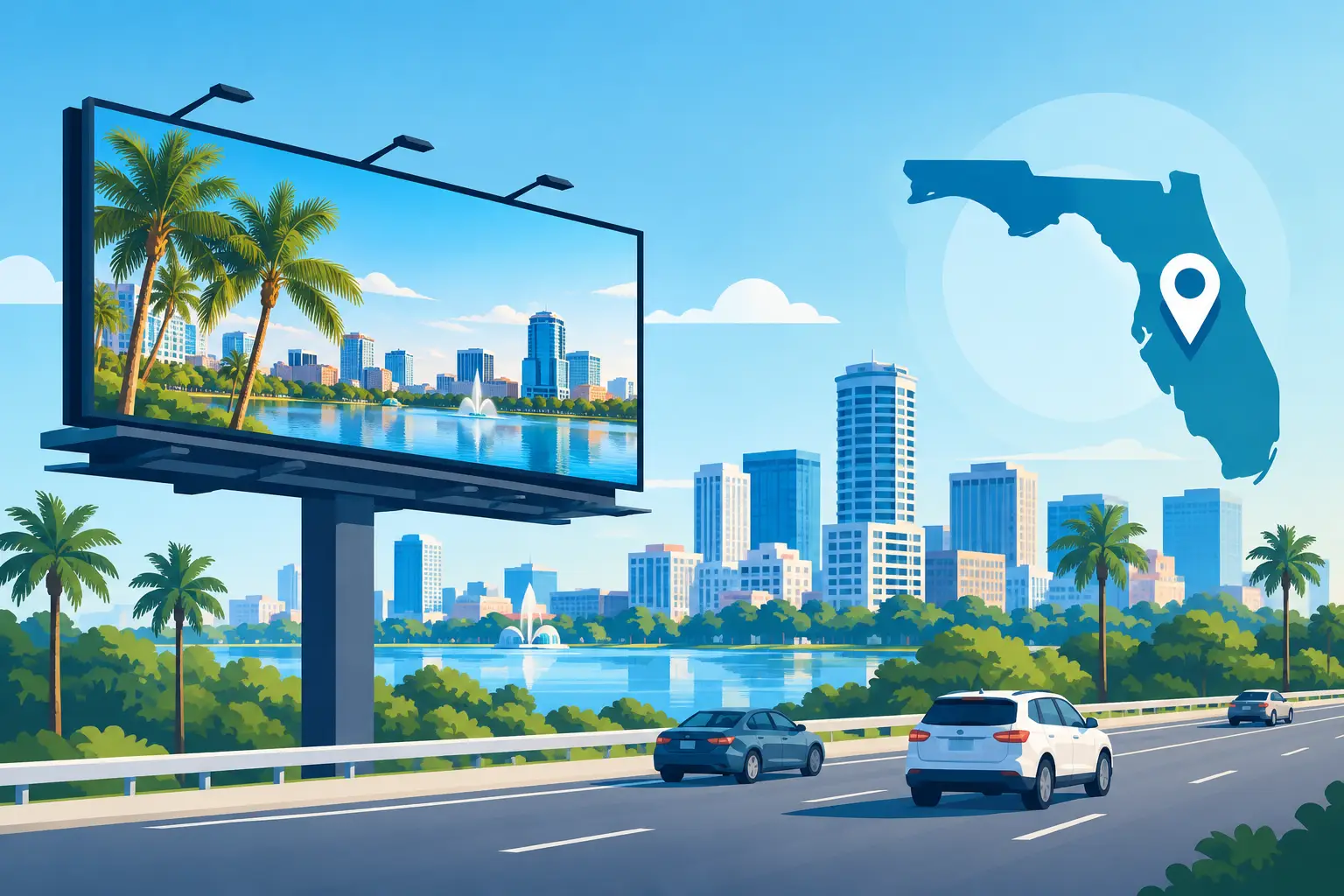

A billboard can be seen thousands of times before a customer ever searches your name, visits your location, or picks up the phone. That is why a smart outdoor media buying guide starts with more than a rate card. It starts with the roads your customers travel, the moments when they are most likely to need you, and the message they can understand in seconds.
For businesses competing across Orlando, Lakeland, Winter Haven, Ocala, Davenport, and Sebring, outdoor advertising creates a steady presence that digital ads often cannot match. People can skip a video, close a browser tab, or scroll past a social post. They cannot scroll past a well-positioned billboard on their daily route. The right campaign puts your brand in the market consistently, builds familiarity, and gives every other marketing channel more momentum.
Start Your Outdoor Media Buying Guide With the Goal
Outdoor media works hard when it has a clear job to do. A restaurant opening a new location may need to drive immediate visits from nearby traffic. A healthcare provider may need broad name recognition across several communities. A regional home service company may want to stay top of mind before a homeowner needs an urgent repair.
Those are different objectives, and they should produce different media plans. Before selecting a billboard, define whether the campaign is built for awareness, store traffic, market expansion, event promotion, recruiting, or support for a larger launch. The goal shapes the geography, timing, creative, and number of displays required.
A useful question is simple: what do you want a driver to remember after seeing your ad three, five, or ten times? If the answer is too complicated to say clearly, the billboard message is probably too complicated as well.
Choose Locations Based on Real Customer Movement
The best billboard is not automatically the one with the largest traffic count. A high-traffic location matters, but audience fit matters just as much. A family entertainment brand may prioritize routes used by visitors and vacationing families. A local law firm may focus on commuter corridors near its service area. A retailer with multiple Central Florida locations may need market-wide coverage that keeps the brand visible across several drive paths.
Look at where customers live, work, shop, and travel. Consider the direction of travel, too. A display facing morning commuters may serve a different purpose than one reaching people on the drive home. Road speed affects how much copy a driver can absorb, while nearby exits, intersections, and landmarks can make a location especially valuable for directional or proximity-based messaging.
Market coverage often beats one isolated placement. A single premium board can create impact, but a coordinated set of displays can create the repetition that turns recognition into response. The right choice depends on your budget, sales territory, and whether your audience concentrates on one key corridor or moves throughout the region.
Ask for Audience Context, Not Just Impressions
Impressions are an essential buying metric because they estimate how many opportunities people have to see your display. They help compare locations and calculate cost per thousand impressions. But impressions alone do not explain whether the audience is relevant to your business.
When evaluating inventory, ask how the location fits your target customer and campaign objective. Is the display near your business or a major destination? Does it reach tourists, local residents, commuters, or a mix? Does it provide a strong approach to a shopping center, medical district, entertainment corridor, or residential growth area? These details turn a traffic number into a practical media decision.
Plan for Frequency, Not One-Time Exposure
Billboards are a frequency medium. Their strength comes from repeated exposure over time. The first view may introduce your name. Later views make it familiar. After enough repetition, your brand is more likely to come to mind when a customer is ready to buy.
That is why campaign length deserves careful attention. Very short flights can work for time-sensitive events, grand openings, and limited promotions. For most brands, however, sustained placement produces better recall and a more efficient long-term presence. A three- or four-period campaign gives creative time to work and helps your message become part of the local landscape.
Consistency matters especially for businesses with longer buying cycles. A consumer may not need a roofer, financial advisor, or medical specialist today. When the need arrives, repeated billboard visibility can make your brand feel like the familiar choice. If budget is limited, it is often better to own fewer strategic locations for a meaningful duration than to scatter a brief message across too many markets.
Build Creative Drivers Can Read Fast
Outdoor creative has one rule that protects almost every campaign: simplify. Drivers have only a few seconds to process the message. A strong billboard usually needs a brand name, one clear benefit or offer, a memorable visual, and a direct way to act when appropriate.
Do not treat a billboard like a brochure, website, or print ad. Long service lists, dense paragraphs, small legal copy, and multiple competing calls to action weaken visibility. If the message cannot be understood from a distance, it is unlikely to perform at road speed.
Use contrast generously. High-contrast colors, large type, clean imagery, and a focused layout give the message room to work. A phone number can make sense for an urgent service, while a short URL, branded search term, or location cue may work better for other categories. The right call to action depends on how people typically buy from you.
Creative should also match the location. A board near your business can include a simple directional cue. A market-wide awareness board may be stronger with a brand promise or recognizable product image. Digital billboards can support time-sensitive messages, rotating promotions, or daypart-specific creative, but only if each message remains simple enough to be understood quickly.
Balance Static and Digital Billboard Options
Static and digital displays each offer valuable advantages. Static billboards provide uninterrupted ownership of a single message. They are especially effective when you want a lasting, fixed presence in a high-value location and a visual that becomes familiar through daily repetition.
Digital billboards offer flexibility. They can support quick creative changes, current offers, multiple messages, and campaigns that need to react to scheduling or market conditions. For a brand promoting an event, seasonal offer, or several locations, that flexibility can be a major benefit.
The trade-off is campaign strategy. Static placements give your brand continuous visibility on that display, while digital campaigns share rotation with other advertisers. Neither format is automatically better. The best plan may use static boards for long-term market ownership and digital boards for tactical promotions, launches, or adaptable messaging.
Set a Budget That Covers the Whole Campaign
A media budget should account for more than the display itself. Production, installation, creative development, campaign length, and the number of locations all influence the final investment. A lower display rate is not always the better value if the location does not reach the right audience or if the campaign lacks enough duration to build frequency.
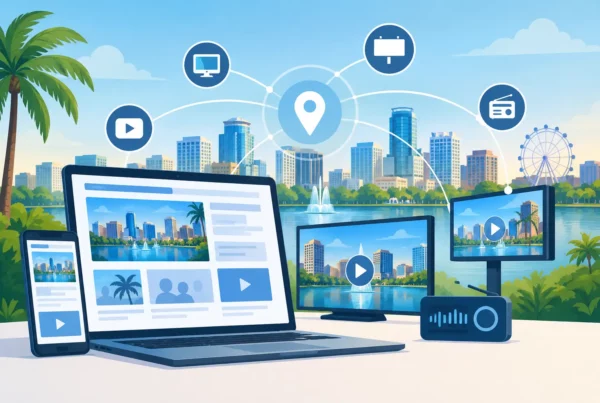
Think in terms of total business impact. If a billboard helps increase branded search, direct traffic, calls, store visits, and response to your digital advertising, its value extends beyond one trackable action. Outdoor advertising frequently strengthens the performance of search, social, radio, connected TV, and direct mail by making the brand more recognizable before customers encounter those channels.
A full-service outdoor partner can make the process easier by helping align inventory, creative, printing, installation, and ongoing campaign management. Orlando Outdoor works this way because a billboard plan should feel like a growth opportunity, not another operational task on your team’s list.
Measure What Matters to Your Business
No single metric tells the full story of outdoor performance. Impressions and cost per thousand impressions help you understand media efficiency. Website traffic, branded search activity, calls, coupon use, location visits, sales lift, and customer surveys can show how the campaign contributes to response.
Before launch, establish a baseline. Review existing website traffic, call volume, store visits, or sales by market. Then watch for changes during the campaign, especially in areas near your selected displays. If you use a dedicated landing page, offer code, or memorable call to action, keep it simple enough that customers can recall it later.
Measurement should guide optimization, not force a narrow view of results. A billboard may influence a purchase without receiving the final click. That visibility is part of the point: outdoor media creates the familiarity that helps customers choose you when they are ready.
The strongest next step is to map your customer territory, identify the routes that matter most, and build a message worthy of being seen every day. When your location, creative, and campaign duration work together, outdoor advertising does more than fill a sign. It gives your business a visible advantage in the places customers already are.