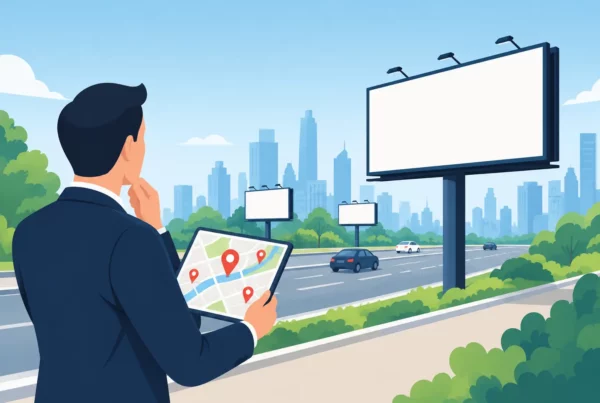

A billboard can put your brand in front of thousands of drivers every day. The question marketing teams hear next is predictable: what happened after people saw it? Geofencing billboard attribution provides a practical way to connect out-of-home exposure with real-world actions, including store visits, website activity, and broader campaign lift.
For Central Florida businesses, that matters. A restaurant near I-4, a healthcare provider serving Winter Haven, or a regional retailer reaching Orlando commuters does not need vague promises about awareness. They need clear evidence that a high-visibility location is helping move customers closer to a purchase.
What Is Geofencing Billboard Attribution?
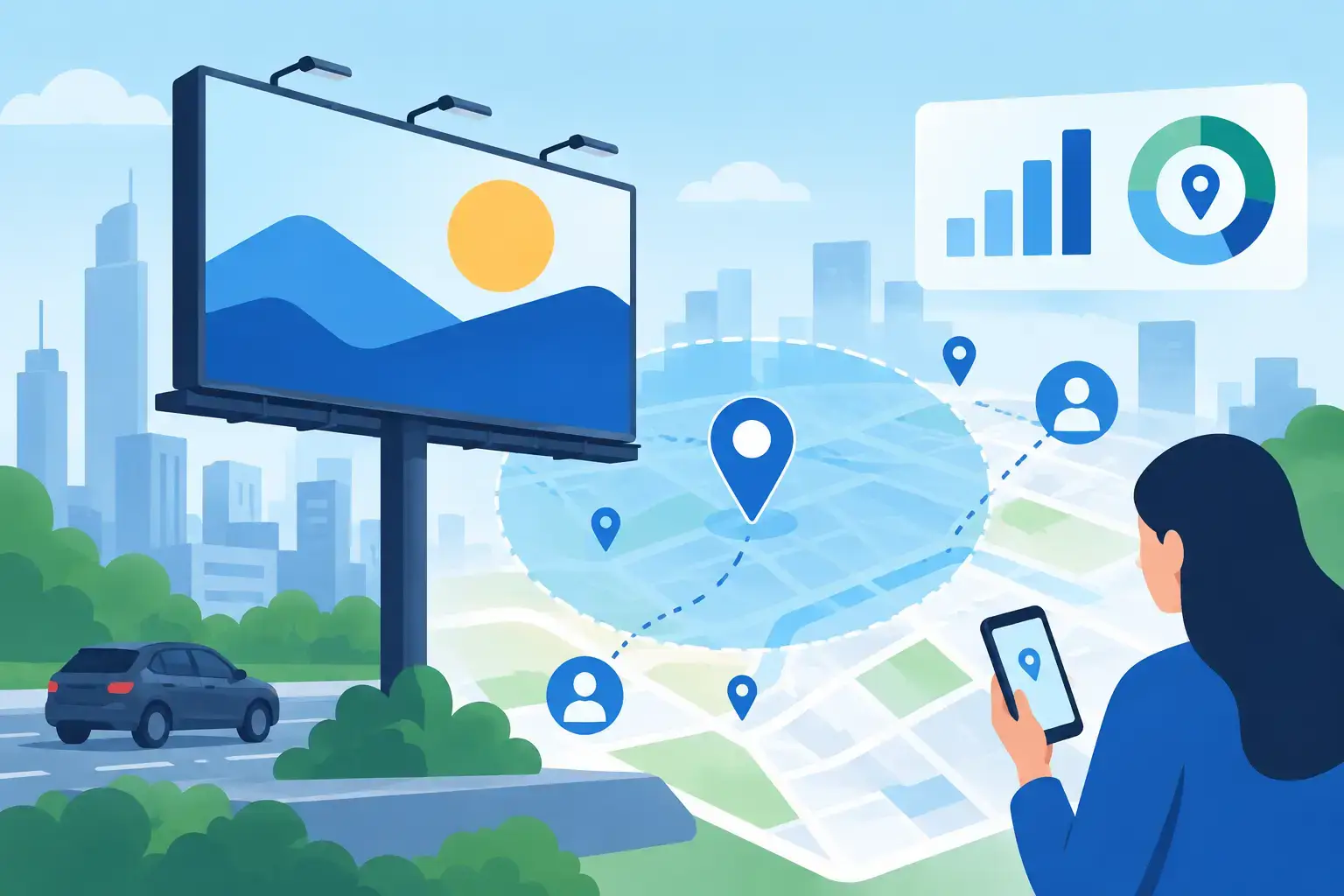
Geofencing billboard attribution uses anonymized mobile location data to estimate whether people exposed to a billboard later visited a defined business location or took another measurable action. A virtual geographic boundary, or geofence, is established around a billboard. When an opted-in mobile device enters that exposure area, the campaign can identify that device as part of an exposed audience.
A second geofence is then placed around the advertiser’s location, such as a dealership, restaurant, medical office, retail store, event venue, or sales center. If devices associated with billboard exposure later appear at that location, the data can indicate a potential visitation lift tied to the campaign.
This is not the same as claiming a billboard caused every visit. People make purchasing decisions for many reasons: location convenience, pricing, recommendations, search results, seasonality, and other advertising all play a role. Attribution gives marketers a disciplined way to see whether exposed audiences visited at a stronger rate than a comparable unexposed audience.
Why Billboard Measurement Has Changed
Billboards have always been measurable in meaningful ways. Traffic counts, impressions, market coverage, reach, frequency, and cost per thousand impressions remain essential when selecting outdoor media. They show how many opportunities a campaign has to be seen and how often the right audience is likely to encounter it.
Geofencing adds another layer. Instead of stopping at estimated exposure, it helps a business evaluate what audiences did afterward. That can make outdoor advertising easier to defend in a media plan, especially when leadership expects every channel to contribute evidence, not just visibility.
The value is especially strong for businesses with physical locations. If a new fitness center opens in Davenport, for example, a billboard campaign can build immediate awareness among drivers on relevant daily routes. Location-based measurement can then help show whether exposure is contributing to visits during the launch period.
For brands with longer sales cycles, the primary outcome may not be an instant store visit. A law firm, homebuilder, hospital system, or B2B service provider may use attribution alongside website traffic, branded search, lead volume, and customer relationship data. Outdoor often starts the recognition process, then other channels capture demand later.
How Geofencing Billboard Attribution Works
The process begins with a campaign plan built around the audience and the business objective. A strong plan identifies the billboard locations, campaign dates, target trade area, and the action that matters most. For one advertiser, that may be visits to a store. For another, it may be visits to several franchise locations across Central Florida.
Next, the measurement partner creates an exposure zone around each billboard. The size and shape of that zone should reflect how the unit is viewed. A digital billboard on a busy freeway, for example, may require a different methodology than a static display on a surface street near a retail district. Direction of travel, traffic speed, visibility, dwell time, and nearby roads all affect how exposure should be defined.
After the campaign begins, aggregated mobile device signals are used to build an exposed audience. The analysis then compares that group with a control group designed to resemble the exposed audience without entering the billboard’s exposure area. The difference in visitation rates is used to estimate lift.
The final report may include metrics such as:
- Exposed devices or audience estimates
- Visits to a target location or group of locations
- Incremental visitation lift versus a control group
- Cost per incremental visit
- Visit frequency and distance traveled
- Performance by billboard location, market, or creative period
These metrics are most useful when they answer a business question. A lower cost per incremental visit could support shifting budget toward a particular corridor. Strong performance near a new location may support extending a campaign. If results are softer than expected, the issue may be the board, the creative, the offer, the location geofence, or simply an objective that does not match how customers buy.
What a Good Attribution Plan Looks Like
Good measurement starts before the billboard goes up. Waiting until the end of a campaign to decide what success means makes the data far less valuable. Define the outcome first, then build the campaign around it.
For a retailer, the outcome may be more visits within a five-mile trade area. For a tourism business, it may be visitation to an attraction during a defined travel window. For a regional brand without one physical destination, it may be a combination of market-wide reach and digital engagement.
Creative also matters. Geofencing can tell you whether exposure correlates with action, but it cannot rescue a message that drivers cannot absorb. Outdoor creative should be immediate: a clear brand, one primary idea, easy-to-read type, and a memorable call to action. A billboard earns its value through repeated visibility, so the message needs to work in seconds and remain recognizable on the second, fifth, and fifteenth impression.
Campaign length matters, too. Short flights can be useful for events, promotions, and openings, but they may not generate enough volume for reliable analysis, particularly for businesses with limited foot traffic. Longer campaigns create more exposure and provide a better view of performance over time. The right duration depends on traffic volume, audience size, seasonality, and the number of locations being measured.
Where Attribution Can Mislead Marketers
Geofencing billboard attribution is powerful, but it is not a magic scorecard. Treating every detected device as a confirmed viewer or every later visit as a sale leads to bad decisions. Mobile location data is modeled, privacy-aware, and dependent on data availability, device settings, and methodology.
A location geofence can also create false signals if it is too broad. A shopping center may contain many businesses. A hospital campus can include offices, parking facilities, and unrelated services. The measurement design must distinguish a meaningful customer visit from someone passing through or visiting a neighboring tenant.
Control groups deserve attention as well. If the exposed and unexposed audiences are not reasonably comparable, lift results can be overstated or understated. This is why the quality of the measurement partner and the campaign setup matter as much as the report itself.
Most importantly, visitation is not revenue. A visit may lead to a purchase, an appointment, a tour, or nothing at all. When possible, pair location-based attribution with point-of-sale data, appointment records, promo codes, customer surveys, website analytics, and branded search trends. No single measurement source tells the whole story. Together, they give marketing teams a much stronger basis for investment.
Turning Billboard Results Into Better Media Decisions
The best use of attribution is not proving that outdoor deserves credit after the fact. It is using evidence to make the next campaign better.
If a billboard near Lakeland produces more incremental visits than another placement, investigate why. The answer may be traffic volume, proximity to the business, a better commuter audience, clearer sightlines, or a more relevant message. If a campaign performs well in Orlando but not Ocala, the issue may be market fit rather than the outdoor medium itself.
Attribution can also help businesses coordinate channels. A billboard can establish familiarity before someone sees a paid social ad, searches for a brand, hears a radio spot, or receives a direct mail piece. Rather than forcing channels to compete for credit, marketers can use the data to build a more connected campaign. Outdoor creates broad, repeated presence; digital and other media can reinforce the message and capture response.
For agencies and multi-location brands, consistent reporting across markets creates another advantage. A shared methodology makes it easier to compare performance, identify high-value corridors, and scale what works without losing sight of local conditions.
Orlando Outdoor can help businesses align location, creative, production, and campaign execution around the audiences that matter most. When measurement is part of the plan from the beginning, a billboard becomes more than a highly visible display. It becomes a smarter local growth tool.
The most useful question is not whether every person who saw a billboard can be tracked. They cannot, and they should not be. The better question is whether the campaign is reaching the right people often enough to create measurable momentum for your business. Geofencing attribution gives marketers a credible way to keep asking that question, then act on the answer.